Here's a question: what system in your body has no pump, runs entirely on muscle contractions and gravity, handles waste removal, fat absorption, and immune defense — all while getting approximately zero credit?
Meet your lymphatic system. It's like your body's sanitation department, plumbing crew, and security team rolled into one. And if you've never thought about it, you're not alone. Most people don't — until something goes wrong.
What Is the Lymphatic System, Anyway?
Think of your circulatory system as a highway network. Your heart pumps blood out through arteries and back through veins — a closed loop with a powerful pump at the center.
Your lymphatic system is the drainage ditches alongside that highway. It collects the fluid, proteins, and waste products that leak out of your blood vessels into your tissues, filters them through roughly 600 lymph nodes (yes, six hundred), and returns the clean fluid back to your bloodstream. Without it, your tissues would swell like a water balloon, your immune cells would have nowhere to meet and coordinate, and metabolic waste would just... accumulate.
The system includes lymph nodes, the spleen, the thymus, tonsils, bone marrow, and a vast network of vessels that runs parallel to your circulatory system. It has three essential jobs:
- Fluid balance — Collects and returns excess interstitial fluid to prevent dangerous swelling
- Fat absorption — Helps absorb dietary fats and fat-soluble vitamins from your digestive system
- Immune defense — Houses and transports lymphocytes (white blood cells) that identify and destroy pathogens, damaged cells, and even cancerous cells
Sources: Cleveland Clinic: Lymphatic System; NIH StatPearls: Physiology, Lymphatic System
Enter Manual Lymphatic Drainage
Manual Lymphatic Drainage (MLD) was developed in the 1930s by Danish physiotherapist Dr. Emil Vodder and his wife Estrid while working at a clinic on the French Riviera. They noticed that many of their patients with chronic colds, sinus infections, and throat problems had swollen, hardened cervical lymph nodes.
At the time, the lymphatic system was poorly understood, and manipulating lymph nodes was considered taboo in the medical community. Vodder did it anyway.
Using incredibly gentle, circular massage strokes, he began stimulating lymph flow in the head and neck. His first patient's symptoms resolved completely after 10 sessions. By 1936, the Vodders had refined the technique and presented it publicly in Paris. The medical community was skeptical. The patients were not.
Today, MLD is the most prescribed and reimbursed physical therapy in Germany, and the Vodder method is taught in schools worldwide.
Sources: Vodder School: MLD History; Physiopedia: Manual Lymphatic Drainage
How It's Different from Regular Massage
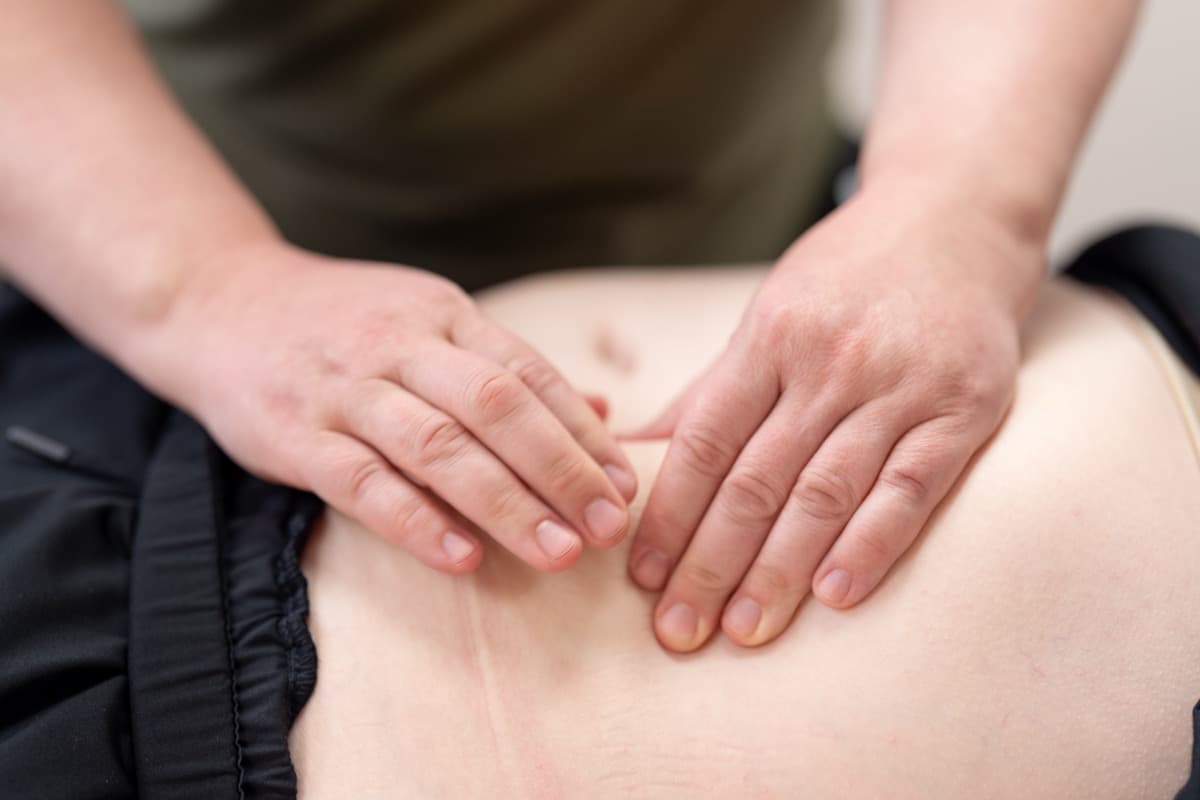
If you walk into a lymphatic drainage session expecting deep tissue work, you're in for a surprise. MLD is nothing like a traditional massage. Here's how they compare:
Pressure: MLD uses feather-light pressure — roughly the weight of a nickel on your skin (about 1-4 ounces). Traditional massage uses moderate to firm pressure.
Speed: Slow, rhythmic, almost hypnotic strokes. There's no kneading, no digging, no "let me get in there."
Direction: Every stroke follows specific lymphatic pathways toward your lymph nodes. The therapist starts at the neck and clavicle area (the "terminus" where lymph drains back into the bloodstream) and works outward from there.
Target: MLD targets the superficial lymphatic vessels just beneath your skin — not your muscles. This is why the pressure is so light. Push too hard and you bypass the lymph vessels entirely.
Oil: Little to none. The technique requires a slight grip on the skin to create the stretching motion that moves lymph. Lotion would make everything too slippery.
The result? You won't feel "worked on" the way you do after a deep tissue session. Instead, you might feel lighter, more relaxed, and — fair warning — you'll probably need to use the bathroom more than usual afterward. That's your lymph draining. It's a good sign.
Source: Cleveland Clinic: Lymphatic Drainage Massage
What the Research Says
Swelling and Edema Reduction
This is where MLD has its strongest evidence base. A systematic review in the Journal of Orthopaedic & Sports Physical Therapy found consistent evidence supporting MLD for reducing edema, managing pain, and improving range of motion in musculoskeletal injuries. Separate research on post-dental surgery patients found that MLD efficiently reduced facial swelling and discomfort after wisdom tooth extraction.
Sources: Ebert et al. "Efficacy of MLD in Sports Medicine and Rehabilitation." JOSPT, 2009; PubMed: MLD Reduces Postoperative Facial Swelling, 2007
Lymphedema Management
MLD's most studied application is breast cancer-related lymphedema — the chronic swelling that can occur after lymph node removal during cancer surgery. A 2020 systematic review found that MLD may help prevent progression to clinical lymphedema when used in early post-surgical stages and provides additional volume reduction in mild lymphedema cases.
Source: Muller et al. "Systematic Review of MLD for Lymphedema." PubMed, 2020
Fibromyalgia and Chronic Pain
A 2024 double-blind, randomized, sham-controlled trial found that MLD added to standard medical treatment was effective at reducing pain intensity and improving disease impact in women with fibromyalgia. A separate systematic review of 16 studies on MLD for fibromyalgia rated the methodological quality as good and concluded that MLD may be effective for these patients.
Sources: Navarro-Lara et al. "MLD for Fibromyalgia — Double-Blind RCT." PubMed, 2024; Hernandez et al. "MLD and Myofascial Therapy for Fibromyalgia — Systematic Review." PubMed, 2021
Post-Surgical Recovery
MLD has expanded beyond cancer care into cosmetic and orthopedic surgery recovery. For procedures like liposuction and abdominoplasty, early MLD (starting 48-72 hours post-op with surgeon clearance) can reduce bruising and edema and help limit early fibrosis. A 2023 review in Aesthetic Surgery Journal documented this expanding use, while noting that more rigorous studies are needed.
Long COVID Fatigue
Here's a newer and genuinely exciting application. A 2022 preliminary study examined 20 Long COVID patients treated with the Perrin Technique — a lymphatic drainage-based approach involving weekly sessions plus daily self-massage. Results showed a 45% reduction in fatigue scores for men and 52% for women. A follow-up case report documented decreases in physical fatigue, post-exertional malaise, and depression after 9-12 weeks of treatment.
It's preliminary research, but for the millions of people struggling with persistent post-COVID symptoms, it's worth paying attention to.
Sources: Pereira de Godoy et al. "Reducing Fatigue-Related Symptoms in Long COVID." Phytotherapy Research, 2022; PMC: Manual Lymph Drainage for Post-COVID Symptoms — Case Reports, 2023
Who Benefits Most
Lymphatic drainage massage is particularly valuable for:
- Post-surgery patients — Especially after breast cancer surgery, cosmetic procedures, or orthopedic operations. Always get surgeon clearance first.
- People with diagnosed lymphedema — Primary or secondary. MLD is a cornerstone of lymphedema management.
- Chronic pain sufferers — Particularly those with fibromyalgia or conditions involving inflammation.
- People with chronic sinus congestion — This was actually the original condition that led Vodder to develop MLD in the first place.
- Anyone dealing with persistent swelling — In limbs, abdomen, or face.
- Long COVID patients — Emerging evidence suggests benefit for fatigue and other persistent symptoms.
- People with sedentary lifestyles — If your lymph isn't moving because your muscles aren't moving, MLD can help pick up the slack.
A Word About "Detox"
Let's be honest here, because integrity matters.
Your lymphatic system genuinely does function as a waste removal system — transporting cellular debris, excess proteins, and metabolic byproducts to lymph nodes for processing. MLD facilitates this natural process. That part is real.
But the word "detox" gets thrown around a lot in wellness marketing, and it's important to be straight with you: if your lymphatic system is functioning normally, your body is already handling this efficiently. MLD isn't removing mystical toxins that your body can't handle on its own.
Where MLD truly shines is when your lymphatic system is compromised — by surgery, injury, illness, chronic inflammation, or conditions like lymphedema. That's when manual intervention makes a measurable, research-backed difference.
Source: UCLA Health: Lymphatic Drainage — Separating Fact from Fiction
Who Should Skip It
MLD is remarkably safe, but there are situations where it's not appropriate:
- Active infections or cellulitis — Risk of spreading bacteria
- Blood clots or DVT — Risk of dislodging a clot
- Untreated congestive heart failure — Increased fluid return could overload the heart
- Active cancer over the treatment area — Discuss with your oncologist first
- Acute inflammatory conditions — Timing matters
The Bottom Line
Your lymphatic system is doing critical work every second of every day — filtering waste, fighting infection, maintaining fluid balance — all without a pump and without a single complaint. The least you can do is give it some help occasionally.
Manual lymphatic drainage isn't a miracle cure or a mystical detox ritual. It's a gentle, research-backed technique that supports a system your body genuinely relies on. For people recovering from surgery, managing lymphedema, dealing with chronic pain, or just looking to support their overall wellness, it's one of the most underappreciated tools in the therapeutic toolbox.
Curious about lymphatic drainage? Book a session at The Body Clinic, or call us at (801) 896-7211. We'll listen to what your body needs and help it do what it does best — heal.
---
The Body Clinic offers manual lymphatic drainage at our South Ogden and Taylor, Utah locations. View all our services or learn more about us.