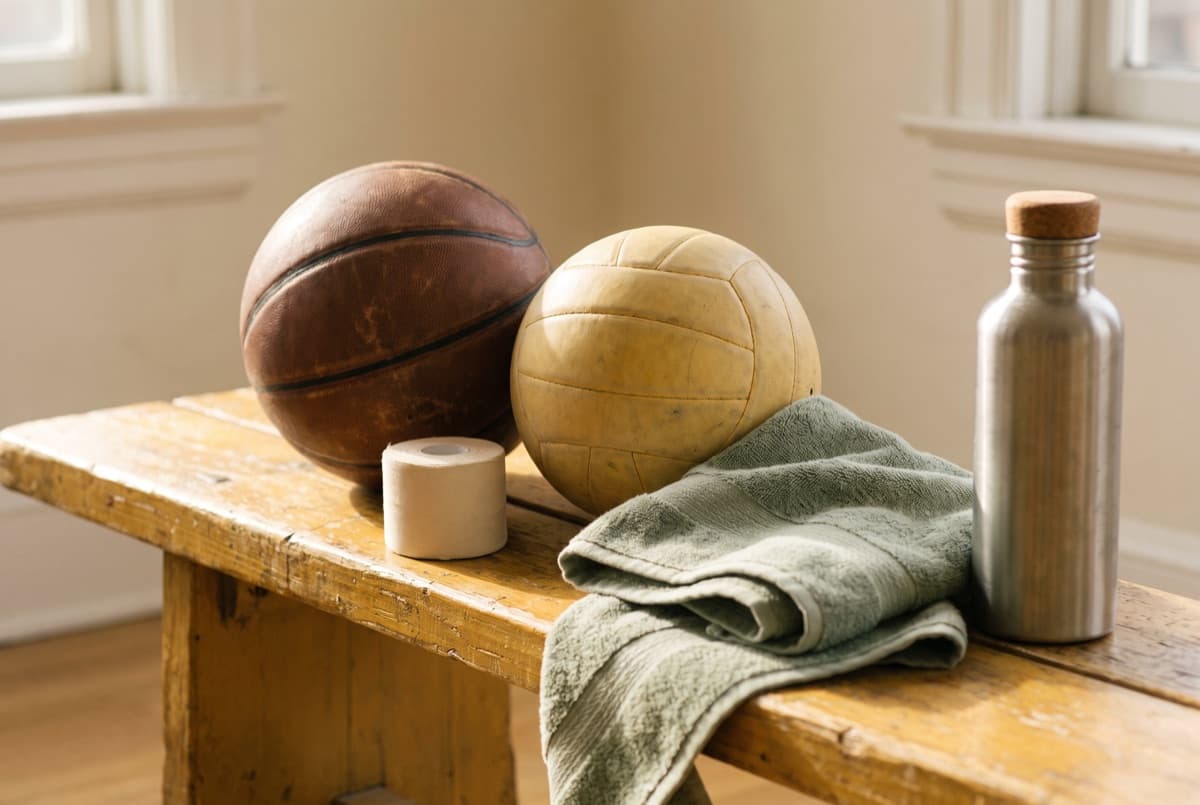
Twenty-five years ago, a kid played a sport in the fall, took winter off or moved to basketball, played another sport in the spring, and ran around outside all summer. Their body had built-in recovery time — months, not minutes — and the growing skeleton got the rest it needed to keep building.
Today's student athletes? They never stop.
Club volleyball that practices four nights a week and tournaments most weekends. AAU basketball that bleeds straight into school ball, then summer leagues. Year-round soccer with travel teams. Baseball pitchers throwing in showcases at 12 years old. High school football that runs spring practice, summer camp, fall season, and winter weight training. Gymnasts and dancers training 20+ hours a week before they can drive.
Their bodies are doing the wear-and-tear of college athletes — except they're 13. And they're still growing.
This is one of the populations we most love to support at The Body Clinic, and the Berry Method is, hands down, our most powerful tool for it. Here's why.
The Real Cost of "No Off-Season"
When a body is given time between hard efforts, it adapts. Muscles repair. Connective tissue strengthens. Inflammation clears out. Growth plates do what growth plates need to do.
When a body isn't given time — when practice is on top of practice, on top of a game, on top of a tournament weekend, on top of conditioning — the picture changes. The aches and pains aren't "growing pains" anymore. They're warning lights:
- The knees that ache during the drive home. Not always Osgood-Schlatter or jumper's knee, but often related — the patella getting pulled out of its track by tight quads and IT band that nobody's released in months.
- The "tight hamstrings" the kid stretches every day and they never get any longer. Usually a pelvis that's tilted out of alignment, holding the hamstrings in a chronically lengthened-and-tense position. No amount of toe-touching is going to fix that.
- The shoulder that "just always feels weird" after pitching. Or after the swim team's morning practice. Or after spiking the ball for three hours straight. The structural misalignments stack up faster than the kid can recover from them.
- The Sever's heel pain that "they'll grow out of." Maybe — but in the meantime, addressing the calf and ankle alignment can take that pain from "I can't run" to "I'm fine" surprisingly fast.
- The low back that's stiff every morning. In a gymnast or dancer, often a sign of repeated extension under load. In any athlete, often a pelvis that needs help finding home.
- The headaches after games. Often shoulder and neck tension that built up under helmet, headgear, or repetitive impact.
Why the Berry Method Is Made for Young Athletes
Most massage techniques work on muscles. The Berry Method is different — it treats the body as a structural system, the way an engineer would look at a building.
Lauren Berry, the founder of the method, was both a bodyworker and a construction engineer. He saw that when a structure is out of alignment — even slightly — every other part of the system has to compensate. Cracks show up in unexpected places. Doors stick. Plumbing backs up.
Apply that to a young athlete: when the pelvis is rotated, the spine compensates. When the shoulder blade isn't tracking right, the elbow takes the strain. When one leg is functionally shorter because of soft-tissue restriction, the whole kinetic chain is loaded asymmetrically — and every step is reinforcing the imbalance.
The Berry Method catches those misalignments and supports the body in returning structures to their proper position. From there, the muscles can stop holding compensations. The growth plates can do their work without one-sided stress. The next practice doesn't pile new strain on top of unresolved old strain.
It's not "deep tissue massage but harder." It's not stretching. It's a precise, anatomically-informed repositioning of structures that should already be in their right place — done with hands, not machines, not force.
Why It's Particularly Right for Growing Bodies
A few things make Berry work uniquely well-suited to student athletes:
- It's gentle and short. Kids don't sit still for an hour of slow Swedish strokes — and they shouldn't have to. Berry sessions can be quick, focused, and surprisingly fast-acting.
- It works with growing bones, not against them. Some bodywork techniques apply force in ways that aren't appropriate for growth plates. Berry work is structural and precise — it doesn't push against tissue that isn't ready.
- It addresses the whole picture. A kid with shoulder pain often has a pelvis that's out of alignment driving it. We don't waste a session only working the shoulder. We follow the chain.
- The results often come fast. Many young athletes notice a shift in the same session — looser hips, easier shoulder rotation, knee that suddenly tracks straight. That fast feedback matters. It teaches them what their body is supposed to feel like.
What This Means In-Season
In-season is exactly when most athletes don't get bodywork — because there's never time, and the assumption is that big sessions might leave them sore for the next game.
Here's what we actually find: regular, short Berry-focused sessions during the season help kids stay ahead of the cumulative load instead of trying to chase it after the fact. Aches that would have ended a week limping through practice often clear in a single session. Tweaks that would have become injuries get caught while they're still small.
A typical in-season cadence we recommend for a hard-training kid:
- Pre-season: A session or two to clean up patterns from the off-season and start the season with the body well-aligned.
- In-season: A short, focused session every 2–4 weeks depending on training load and how the kid is feeling. We're not doing big, draining work — we're keeping the structures aligned and the recovery flowing.
- Post-season: A more thorough session to release whatever the season piled on before they go straight into the next sport.
- As needed: When something flares up — a knee, a shoulder, a hip — getting in early can be the difference between a one-session fix and a six-week problem.
What a Session Looks Like for a Young Athlete
We make this easy:
- Quick intake. What sport, what position, what's been hurting, what's the practice load this week, any growth spurts lately. Parent stays in the room (or doesn't — kid's preference).
- Focused Berry work. Targeted, short, and conversational. We tell them what we're doing and why. They learn about their own body in the process.
- Other supportive techniques as needed. Targeted deep tissue for specific tight spots, lymphatic work to flush soreness.
- Self-care to take home. A couple of stretches or movement cues — not a 40-minute routine no kid is going to do. Something realistic they can fit into their day.
When to See a Doctor First
We're a great fit for the cumulative aches, the imbalances, the recurring tweaks, the recovery support. We are not the right first stop for:
- An acute injury — a fall, a collision, a pop they heard
- Sharp pain that won't bear weight
- Visible swelling, bruising, or deformity
- Pain that wakes them at night
- Any concussion or head injury
We Don't Heal Athletes. We Help Them Stay in Their Bodies.
Your kid's body wants to do this. It's built for movement, repair, growth, and resilience. Our job isn't to fix something broken — it's to support the alignment so the body can do what it already knows how to do, and to do it faster than the next game can pile new stress on.
This is some of our favorite work. We watch kids walk in stiff, frustrated, and convinced their body is letting them down — and walk out moving like themselves again. That moment never gets old.
Ready to support your athlete? Book an appointment at The Body Clinic, or call us at (801) 896-7211. Mention you're booking for a student athlete and we'll match you with a therapist who specializes in Berry Method work for young, growing bodies.
---
The Body Clinic specializes in Berry Method bodywork for student athletes — supporting recovery, alignment, and in-season performance for soccer, basketball, volleyball, baseball, football, swim, gymnastics, dance, and more. We see athletes from Weber and Davis County schools at our South Ogden and Taylor, Utah locations. View all services or learn more about the Berry Method.