What if we told you that the most effective bodywork technique you've never heard of was developed by a structural engineer who learned massage as a child, studied anatomy on cadavers in a coroner's office, and once made an 18-month-old baby crawl for the first time by reshaping her skull with his hands?
Welcome to the Berry Method — a precision approach to the human body that treats your muscles, joints, and organs like the interconnected mechanical system they actually are.
A Mechanic, Not a Healer
Lauren Berry Sr. (1917-1983) didn't call himself a healer. He called himself a mechanic.
"I am not a healer. I'm simply a good mechanic," he'd say. And he meant it.
Berry's story starts in an unlikely place: as a child, his next-door neighbor — a retired Finnish physician and masseur — taught him massage techniques rooted in Swedish Medical Gymnastics and Body Balancing to help his ailing mother. Word spread through the neighborhood. People started showing up at the family doorstep. His mother set out an empty fishbowl for donations. Coins dropped in made a ding sound, so young Lauren called his practice "the ding joint."
But Berry wasn't just naturally talented — he was obsessively curious. When he successfully treated a boy with St. Vitus' Dance (a neurological condition), the boy's grateful father, the county Coroner, gave Berry something extraordinary: autonomous access to the autopsy room. There, Berry spent countless hours examining cadavers, studying how anatomy related to the distortions and imbalances he was treating in living bodies.
He also spent much of his career as a construction engineer. And this combination — hands-on bodywork skill plus an engineer's understanding of structures, forces, and mechanics — produced something entirely new.
Berry was most likely the first Registered Physical Therapist in California. His clinic near the state Capitol in Sacramento served legislators, the Governor, and visiting dignitaries. At his peak, people lined up around the block to see him.
Source: Lauren Berry Biography, Massage Magazine, 2002
So What Actually Is the Berry Method?
The simplest way to understand it: the Berry Method treats your body like a building.
Traditional massage asks, "Where does it hurt?" and works to relax, release, and soothe that area. That's valuable — and it's what most people expect when they get on the table.
The Berry Method asks a different question: "What's out of place, and what moved it there?"
Think of your pelvis as the foundation of a house. If the foundation shifts — even slightly — the walls crack, the doors stick, the plumbing backs up. You could spend all day patching cracks and planing doors, but the real problem is the foundation.
Berry called the pelvis the "keystone in an arch." If it's out of balance, everything above and below compensates. Your lower back tightens. Your shoulders rotate. Your knee tracks wrong. You show up to your massage therapist pointing at your neck, but the actual problem started in your hip.
The Berry Method finds the foundation problem and fixes it.
Repositioning, Not Just Rubbing
Here's what makes the Berry Method fundamentally different from other massage techniques:
Berry discovered that every muscle has a relative position within its surrounding tissues — a "groove" where it functions at peak efficiency. When tissue gets displaced from this groove through trauma, repetitive stress, poor posture, or injury, simply rubbing or kneading the area provides temporary relief but doesn't fix the underlying displacement.
Imagine a garden hose that's kinked. You could massage the kink all day — warm it up, stretch it, apply pressure — and water would flow a little better for a while. Or you could just unkink it. The Berry Method unkinks things.
This is why practitioners describe results that can be immediate. When a displaced ligament is shifted back into its anatomical position, proper joint mechanics are restored right then and there. You're not waiting for tissue to gradually loosen over multiple sessions (though some conditions do require that). You're correcting a mechanical problem.
Berry famously said: "If you understand the force of intelligence in the body, its mechanical operation and structure, you can work on any part of the body you can reach with your hands."
Sources: Lynn Van Norman Medical Massage; Atrium Wellness
What Happens in a Berry Method Session
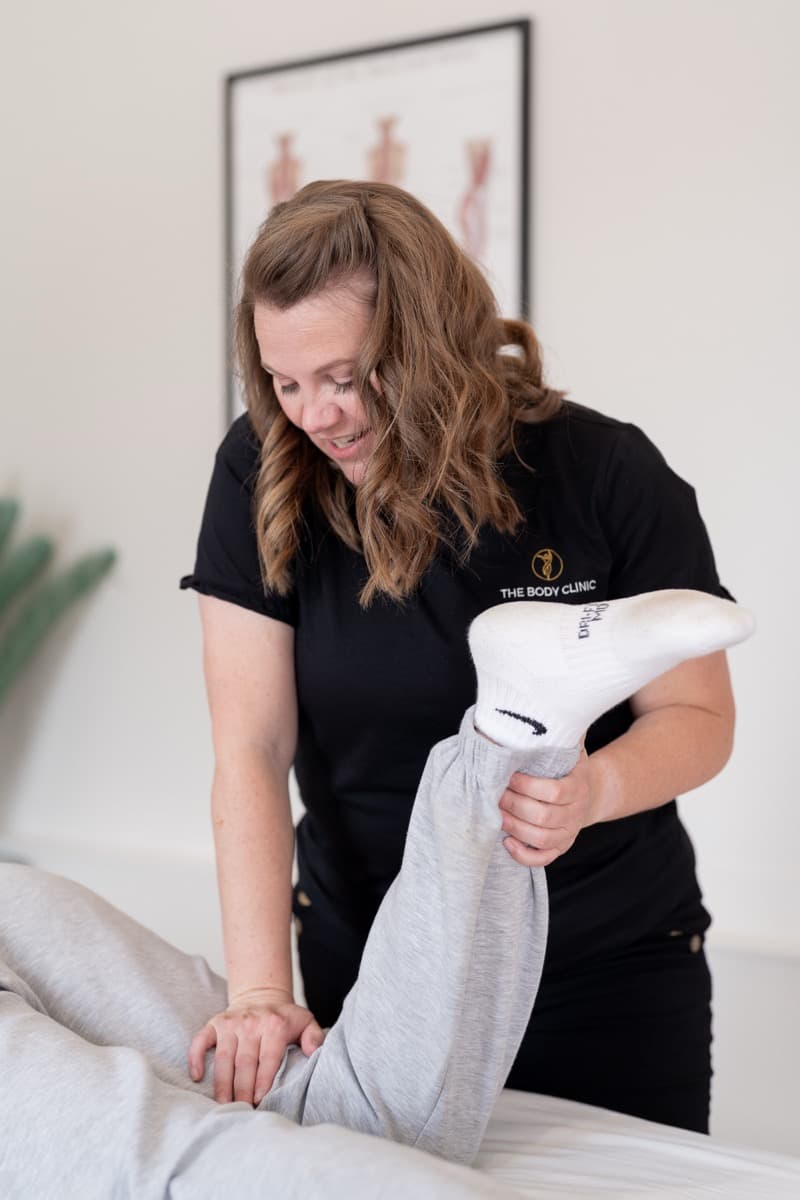
A Berry Method session is unlike any massage you've had. Here's what makes it distinct:
Whole-Body Assessment
Rather than diving straight into your complaint area, a Berry Method practitioner starts by evaluating your overall structure — posture, gait, pelvic alignment, and how your body holds itself against gravity. That knee problem? It might start with pelvic work before the practitioner ever touches your knee.
Multiple Systems, One Session
The Berry Method works across several body systems simultaneously:
- Muscular system — Relieving spasms, correcting distortions, and restoring muscles to their proper "groove"
- Fascial system — Releasing adhesions and scar tissue in connective tissue
- Visceral (organ) system — Very gentle work to reposition organs that have shifted
- Lymphatic system — Berry developed a unique approach to lymphatic drainage
- Skeletal/joint system — Addressing bones, ligaments, and tendons as the "guy wires" of the body
Precision Techniques
The techniques themselves include soft tissue manipulation, Swedish gymnastic stretches, precise repositioning of muscles and ligaments, and gentle visceral work. It's not about force — it's about knowing exactly where things should be and putting them there.
Berry treated muscles, tendons, and ligaments as "the guy wires of the body" — and he found that their distortion was often the real contributor to spinal problems, joint pain, and mobility issues that other practitioners were trying to solve by focusing on bones alone.
What Can the Berry Method Help With?
Because it addresses the body as an integrated mechanical system, the Berry Method's range is remarkably broad:
- Chronic pain — Lower back, neck, shoulders, and hips. Especially pain that hasn't responded to other treatments.
- Postural issues — Rounded shoulders, forward head posture, uneven hips, scoliosis, lordosis, and kyphosis.
- Joint problems — Knee pain, joint instability, clicking, and restricted range of motion.
- Recurring injuries — If you keep hurting the same area, the Berry Method looks for the structural reason why.
- Post-surgical recovery — Addressing adhesions, edema, and structural changes from surgery.
- Headaches and migraines — Particularly tension-related patterns.
- Digestive issues — Through gentle visceral work addressing organ positioning.
- Breathing patterns — Releasing restrictions that cause shallow, chest-dominant breathing.
- Gait abnormalities — Limping, uneven stride, and foot issues.
The Stories That Sound Impossible (But Aren't)
Berry's career is full of accounts that sound like they belong in a novel. A few that were documented by his students:
The crawling baby: In a teaching class, an 18-month-old girl who had never crawled was brought in. Berry assessed that she'd been delivered by forceps, performed gentle cranial restructuring, and then held up a rattle. She rolled over and crawled across the room. The entire class was in tears.
The canceled hip replacement: A young man named Garrison Gunter arrived at Berry's class on crutches, scheduled for a hip replacement. After Berry worked on him, he walked out of the room under his own power. While Berry was speaking with his back to the hotel pool, the class watched through the window as Garrison dove off the diving board. He traveled years later to tell his story at the Pennsylvania State Massage Conference.
These stories are anecdotal, and it's important to say that clearly. The Berry Method doesn't have the peer-reviewed clinical trial base that techniques like Swedish massage and manual lymphatic drainage do — it lives in the tradition of apprenticeship-based bodywork, passed from Berry to his students and from them to practitioners like our team. But the anatomical and mechanical principles it's built on are sound, and the practitioner community, while small, is deeply dedicated for a reason: the work speaks through results.
Source: Lauren's Story, Massage Magazine, 2002
A Method That Nearly Disappeared
When Lauren Berry passed away in 1983, his method very nearly died with him. There was no textbook, no formal curriculum, no institution carrying the torch. Berry had taught through apprenticeships — small groups of students who learned by watching, assisting, and practicing under his supervision for years.
Seven of his advanced students formed The Institute of Integral Health to preserve and teach his work. Today, the method is primarily carried forward by those students and the practitioners they have trained. Training is NCBTMB-approved for continuing education credits, and the apprenticeship model Berry established — learning through mentorship over years, not weekend workshops — remains central to how the technique is passed on.
That apprenticeship model is one reason you won't find Berry Method practitioners on every corner. It takes 5-7 years of dedicated study. The practitioners who emerge from that process understand the body at a depth that simply isn't possible from a certification course.
Sources: The Institute of Integral Health; Atrium Wellness
How It Fits with Other Bodywork
One of the most practical things about the Berry Method is that it doesn't compete with other modalities — it enhances them. As the official Berry Method site describes it: "I have yet to find a modality within the manual arts that this approach does not weave into seamlessly."
At The Body Clinic, we integrate Berry Method principles into our therapeutic work alongside deep tissue massage, craniosacral therapy, lymphatic drainage, and other techniques. The Berry Method gives us a structural framework — a way of understanding why your body is doing what it's doing — and then we can use whatever tools are most appropriate to address it.
It's like the difference between being a chef who can follow recipes and a chef who understands food science. Both can cook. But the one who understands why ingredients behave the way they do can improvise, adapt, and solve problems the recipe book never anticipated.
The Bottom Line
The Berry Method isn't mainstream. It doesn't have a marketing department or a celebrity endorsement. Its founder would have scoffed at the idea of either.
What it has is a century-old lineage of hands-on practice, a foundation in structural engineering and anatomy, and a philosophy that treats your body with the respect it deserves — as a brilliantly designed mechanical system that, given the right adjustments, knows exactly how to heal itself.
If you've tried everything else and nothing has stuck — if your pain keeps coming back, if your body keeps compensating, if you feel like you're patching cracks without fixing the foundation — the Berry Method might be exactly what you need.
Ready to experience precision bodywork? Book a Berry Method session at The Body Clinic, or call us at (801) 896-7211. We'll look at the whole picture, not just the part that hurts.
---
The Body Clinic offers Berry Method bodywork at our South Ogden and Taylor, Utah locations. View all services or learn more about our team.