Loading...
Firm, Focused Work
Deep Tissue Massage
Slow, deliberate pressure into the deepest layers of muscle and connective tissue to unwind the tension that lighter work leaves behind.
What it is
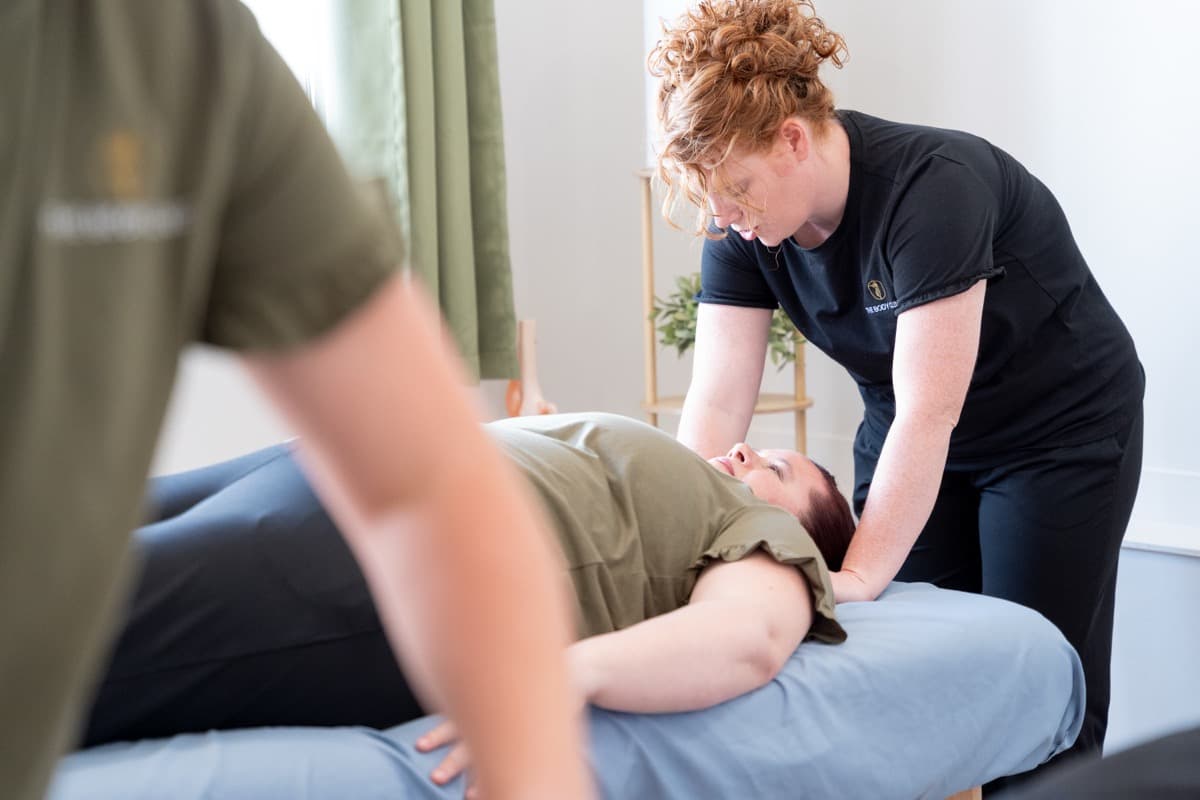
Deep tissue massage is firm, targeted bodywork that reaches past the surface muscles into the deeper layers and the connective tissue that wraps around them. Your therapist works slowly and deliberately — using forearms, knuckles, and braced fingertips to apply sustained pressure rather than the long, flowing strokes of a relaxation massage. The goal isn’t to chase relaxation alone; it’s to address the specific spots where tension has settled in and stayed.
It’s easy to assume deep tissue just means “harder,” but the difference is really about depth and intent. Where a Swedish or therapeutic massage glides over the whole body, deep tissue slows down and stays with one area — a locked-up shoulder, a tight low back, a calf that never quite lets go. This is also where it differs from the Berry Method: the Berry Method follows a structured, whole-body sequence designed to rebalance the entire frame, while deep tissue zeroes in on the specific muscles giving you trouble.
This work is for people who carry real, persistent tension and want pressure that actually reaches it. Desk workers with a stiff neck, athletes pushing through training, longtime sufferers of a knotted upper back, anyone who’s walked out of a softer massage thinking “that felt nice, but it didn’t touch the problem.” If you like to feel the work happening — and you’re ready to communicate about pressure as you go — deep tissue is built for you.
Book this service
60 / 90 min·From $85
Who it’s for
- Chronic neck, shoulder, and upper-back tension
- Stubborn knots and adhesions that lighter work won’t reach
- Low-back tightness from sitting or heavy lifting
- Athletic overuse and post-training muscle recovery
- Limited range of motion from long-held tension
- Repetitive-strain tension from desk or manual work
What to expect
Every session starts with a short consultation. Your therapist will ask where you’re holding tension, what aggravates it, how much pressure you’re looking for, and whether you have any injuries or sensitive areas to work around. This is the moment to be specific — pointing to the exact spot on your shoulder that’s been bothering you helps your therapist build the session around what your body actually needs that day.
On the table you’ll be comfortably draped throughout, with only the area being worked uncovered. Your therapist warms the tissue first, then gradually deepens the pressure, working along the muscle and into the tighter bands and knots. Deep tissue can feel intense — a “good hurt” that stays productive, never sharp or unbearable. Pressure is always a conversation, so speak up anytime and your therapist will adjust; the right depth is the one your body can relax into.
Afterward it’s normal to feel loose and a little tender, much like you might after a solid workout. Your therapist will suggest simple aftercare — drinking water, gentle movement, warmth on any sore spots — to help you get the most from the session. Many clients find a day or two of mild soreness gives way to noticeably easier movement.
Benefits
Relief for deep tensionLooser, freer movementFaster athletic recoveryEases stubborn knotsBetter range of motionCalmer, less stressed
Frequently asked
Will it hurt?
Deep tissue is firmer than a relaxation massage, so you’ll feel the work — often described as a “good hurt” that stays satisfying rather than sharp. It should never be unbearable. Pressure is always a two-way conversation, so tell your therapist anytime you’d like more or less and they’ll adjust.
How is this different from the Berry Method?
The Berry Method follows a structured, whole-body sequence designed to rebalance your entire frame from head to toe. Deep tissue is more targeted — it concentrates firm pressure on the specific muscles and knots giving you trouble. If you have one stubborn area, deep tissue is a great fit; if you want a full structural reset, ask us about the Berry Method.
How many sessions will I need?
It depends on how long the tension has been building and what you’re hoping to change. Many clients feel meaningful relief after a single session, while long-held or recurring tension often responds best to a series spaced a week or two apart. Your therapist can suggest a rhythm after working with you and seeing how your body responds.
What should I wear?
Wear whatever you’re comfortable in to your appointment. During the massage you’ll undress to your level of comfort and stay draped with a sheet throughout — only the area being worked is ever uncovered. Many people prefer loose, easy clothing to slip back into afterward, since you may feel pleasantly relaxed when you’re done.
Related services
Ready to book Deep Tissue Massage?
Reserve your session online, or reach out and we’ll help you choose.